Short-Term Rental & Airbnb Guide for Whitefield Apartment Owners 2026

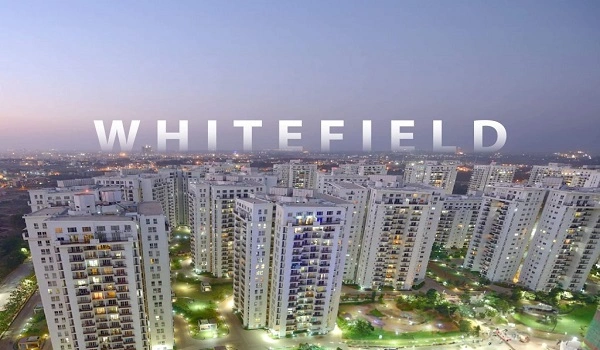
Whitefield draws a steady stream of business travellers, project-based IT workers and corporate visitors who need furnished accommodation for days or weeks rather than months. This creates an apparent opportunity for apartment owners to earn higher per-night returns through platforms such as Airbnb or MakeMyTrip Stays rather than locking into a traditional 11-month tenancy. However, short-term rental (STR) in a gated community involves several layers of permission and compliance that a traditional long-term rental does not: society bye-law restrictions, income tax classification, potential GST obligations and insurance gaps. This guide covers each layer so you can make an informed decision. This is general information; confirm tax and GST treatment with your CA.
The First Question: Is STR Allowed in Your Society?
Before evaluating any financial returns from short-term rental, check whether your gated community's bye-laws permit it. Many Whitefield communities restrict or prohibit STR explicitly. The reasons most associations cite are security (frequent unknown guests bypass the normal visitor registration and verification process), community character (transient guests have different lifestyle patterns from resident owners and long-term tenants) and insurance (the community's group insurance may not extend to STR guests in common areas).
Some communities require RWA prior approval for each STR booking, which makes platform-based STR operationally impractical. Others have a blanket prohibition that makes it a bye-law violation regardless of how you structure the booking. Even if the bye-laws are silent on STR today, the association can introduce a restriction through an AGM vote. The gated community rules and bye-laws guide explains how bye-laws are created, amended and enforced in Whitefield apartment communities.
If you are buying specifically for STR, get written confirmation from the current RWA or association management office that STR is permitted, and review the bye-laws yourself. A verbal confirmation from the builder's sales team is not binding on the association after possession.
Bottom line: check the society bye-laws and get written RWA confirmation before purchasing for STR; a blanket prohibition is not uncommon in Whitefield gated communities.
Income Tax Treatment of STR Income
The income tax classification of STR income in India depends on whether you are providing accommodation only or accommodation plus services. This distinction determines which head of income applies and which deductions are available.
| STR model | Typical tax classification | Key implication |
|---|---|---|
| Pure space rental (no services: no housekeeping, no linen, no food) | Likely "income from house property"; taxed on net annual value after 30% standard deduction and municipal taxes paid | Home loan interest deduction under Section 24(b) applies; no limit on interest deduction for let-out property |
| Accommodation with services (housekeeping, linen, breakfast, check-in assistance) | Likely "business income" or "income from other sources" depending on regularity and scale; taxed after actual expenses | Requires maintaining books of account; more deductions available but also more compliance; Section 24(b) interest deduction may not apply under business income head |
In practice, most platform-based STR in India (Airbnb, MakeMyTrip Stays) involves at least basic services, which pushes the income toward the business income classification. Some OTA platforms also deduct TDS at source on payouts to Indian hosts. Confirm the correct head of income and the deductions available for your specific STR model with a CA before filing your income tax return. The home buyer tax benefits guide covers the Section 24(b) interest deduction and how it applies to let-out versus self-occupied properties.
Bottom line: if you provide services alongside accommodation, STR income may be classified as business income, not house property income; the deductions and compliance requirements differ significantly; confirm with a CA.
GST on Short-Term Rental
GST applicability to STR in India depends on whether the supply qualifies as residential accommodation (which may be exempt) or as hotel or hospitality accommodation (which is GST-liable above applicable thresholds and rate slabs). The classification turns on the nature of the service, the daily tariff, and the character of the supply. Pure residential accommodation on a monthly rent basis is generally exempt from GST, but STR by the night with services resembles a hotel supply, which attracts GST.
If your annual STR turnover exceeds Rs 20 lakh (or Rs 10 lakh in some states), you may be required to register for GST regardless of the supply classification. The rules are detailed, subject to change, and turn on facts specific to your hosting model. Confirm the current GST classification, applicable rate and registration threshold for your STR arrangement with a CA or GST practitioner before listing.
Bottom line: GST may apply to STR with services above turnover thresholds; confirm the current classification and registration requirement with a CA or GST practitioner.
STR vs Long-Term Rental: Investment Comparison
| Factor | Short-Term Rental (STR) | Long-Term Rental (LTR) |
|---|---|---|
| Gross nightly income | Higher per night when occupied | Lower per night but predictable monthly income |
| Occupancy risk | Variable; Whitefield has corporate demand peaks but also troughs (holiday periods, between projects) | Low once a reliable tenant is in place; typically 11 months with renewals |
| Furnishing requirement | Fully furnished essential; higher initial investment | Semi-furnished or unfurnished acceptable; lower initial outlay |
| Management effort | Active: check-in/out, housekeeping between guests, maintenance at higher frequency, platform management | Largely passive after tenant onboarding; periodic inspection |
| Tax and compliance | More complex: potential business income classification, TDS by platform, possible GST registration | Simpler: house property income, possible TDS under Section 194-IB by tenant if rent exceeds threshold |
| Society bye-law risk | Higher: explicit restrictions in many Whitefield communities | Lower: tenants require RWA intimation but are generally permitted |
| Insurance | Standard home insurance typically excludes guest damage in commercial hosting; check policy | Standard home insurance applies; damage disputes handled through deposit and civil process |
| Net return vs LTR | Potentially higher if occupancy is consistently above 60-70%; lower than expected if occupancy is variable | Predictable; easier to model for loan repayment planning |
The rental yield and ROI guide covers the long-term rental yield benchmarks and investment return calculation for the Whitefield market. For a fully-furnished flat, refer to the furnished vs unfurnished guide which covers how furnishing level affects both rental value and the initial investment required.
Bottom line: STR can yield higher returns than LTR but requires active management, higher initial furnishing investment, greater compliance complexity and is subject to society bye-law permission; model the net return carefully before committing.
Who Manages Short-Term Rental?
Managing STR yourself from a distance, or if you are an NRI or an owner with a full-time job, is operationally demanding: check-in/check-out coordination, housekeeping between stays, restocking consumables, maintenance response and platform messaging. Several co-hosting companies and property management services operate in Bengaluru's IT corridor and handle end-to-end STR operations for a fee (typically a percentage of gross booking revenue; confirm current market rates directly with providers as these vary). If you plan to use a professional co-host or property manager, factor in this cost when modelling your net STR return and compare it against the passive income from a traditional long-term tenancy.
Bottom line: self-managing STR requires significant time; professional co-hosting services exist but their fee reduces the net yield advantage over LTR.
Insurance Considerations
A standard home insurance policy covers the structure and contents against named perils (fire, burglary, flooding, natural disaster) but typically excludes damage caused by paying guests in a commercial hosting context. If an STR guest damages your furniture, appliances or fittings, a standard home insurance claim for those losses may be declined on the grounds that the property was being used commercially at the time. Review your policy's exclusions explicitly before listing as an STR.
Some OTA platforms offer a host protection or host guarantee programme that covers guest-caused property damage up to a specified limit, but these programmes have their own terms, caps, exclusions and claim processes. The home insurance guide covers what standard apartment insurance covers and what it does not, including the gap between the society's group policy and your individual unit policy.
Bottom line: standard home insurance likely does not cover STR guest damage; check your policy and understand the OTA platform's host protection terms and limits before listing.
Checklist Before Listing Your Whitefield Apartment on an STR Platform
| Check | Why it matters |
|---|---|
| Obtain written RWA permission that STR is allowed in your community | Without this, you risk bye-law violations and fines regardless of platform rules |
| Review your loan agreement if you have a home loan | Confirm there is no commercial-use restriction that conflicts with hospitality-style STR |
| Confirm income tax classification with your CA | The filing head (house property vs business income) affects deductions and compliance burden |
| Confirm GST applicability with your CA or GST practitioner | Unregistered supply above turnover threshold attracts penalties under GST law |
| Review home insurance policy exclusions | Standard policies likely exclude STR guest damage; consider supplementary or standalone hosting insurance |
| Budget for furnishing to STR standard | STR guests expect fully furnished flats with working appliances, reliable internet and basic amenities |
| Arrange housekeeping and maintenance support | STR requires professional-grade turnaround between guests; self-managing is impractical from a distance |
Prestige Whitefield: Investment Considerations
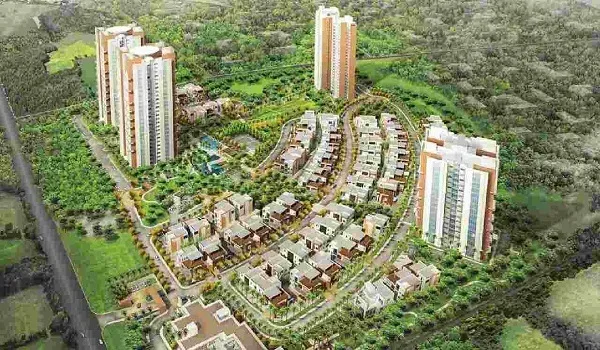
At Prestige Whitefield by Prestige Group, an 18-acre township in Whitefield, investor buyers should evaluate both LTR and STR options against society bye-laws and their personal management capacity before deciding on a rental strategy. For a traditional long-term rental agreement and onboarding process, see the tenant rental agreement guide. For pricing and configuration details, see the price page and the Whitefield guide.
Frequently Asked Questions
1. Is short-term rental allowed in Whitefield gated communities?
It depends on the community's bye-laws; many Whitefield communities restrict or prohibit STR. Get written RWA confirmation before listing on any platform.
2. How is STR income taxed differently from regular rental income?
Pure space rental is typically house property income; STR with services may be classified as business income with different deductions. Confirm the classification with a CA before filing.
3. Do I need GST registration for Airbnb income?
Possibly, if annual STR turnover exceeds Rs 20 lakh and the supply is classified as a taxable hospitality service. Confirm the current treatment with a CA before listing.
4. Can I get a home loan to buy a Whitefield apartment specifically for short-term rental?
Yes, but check the loan agreement's use-of-property clause; some lenders restrict commercial hospitality use. Confirm with your lender before committing.
5. Does my home insurance cover Airbnb or STR guest damage?
Standard home insurance typically excludes STR guest damage; a claim may be declined if the property was used commercially. Review your policy exclusions before listing.
Conclusion
Short-term rental in Whitefield can generate higher per-night revenue than a traditional tenancy, but only under the right conditions: the society must permit it, your income tax and GST positions must be correctly established, your insurance must actually cover the scenario and the management overhead must be factored into the net return. For many investor buyers, the passive income of a well-structured long-term tenancy with a verified tenant and a properly drawn leave-and-licence agreement, as covered in the tenant rental agreement guide, will be the more practical and predictable choice. If you decide to pursue STR, work through the checklist above before listing and engage a CA to structure the income and compliance correctly from the start. For the community rules that govern what STR-related activities are permitted in your specific gated community, the gated community rules and bye-laws guide covers the bye-law framework, amendment process and dispute resolution in detail.
Prestige Whitefield Blog