Builder Payment Plan Guide for Whitefield Apartments 2026

When you buy an under-construction apartment in Whitefield, you do not pay the full price on the day you book. You pay in instalments spread over the construction period, each triggered by a milestone, a calendar date, or a combination of both. Understanding which payment plan you are signing up for before you commit is as important as understanding the floor plan, because the wrong plan can create cash-flow strain, misalign your home loan disbursals, or expose you to payment demands at stages where construction has not progressed. This guide explains the three main builder payment plans used in Whitefield gated communities, the K-RERA rule that limits advance collection, and what to verify in your agreement before signing.
Three Main Payment Plans in Whitefield
| Plan type | How it works | Buyer advantage | Buyer risk |
|---|---|---|---|
| Construction-Linked Plan (CLP) | Each instalment is triggered by a verified construction milestone: excavation, slab, brickwork, plaster, flooring, fitting, possession | You pay for progress that has actually happened; outflow stops if construction stalls | Milestones can cluster in a short period, creating sudden bunched payment demands |
| Time-Linked Plan (TLP) | Instalments fall on fixed calendar dates regardless of construction progress | Predictable payment dates make budgeting easier; sometimes offered at a marginally lower base price | You may pay before the corresponding construction stage is complete; higher exposure if the project is delayed |
| Down-Payment Plan | A large lump sum (typically 80-95% of the apartment cost) is paid upfront within 60-90 days of booking; a small balance at possession | Builders typically offer a discount of 2-5% on the list price for this plan; interest cost is low if you have funds available | Maximum upfront exposure; if the project is delayed or stalled, your funds are locked in with limited leverage |
| Flexi / Hybrid Plan | A moderate upfront component (30-50%) followed by instalments that are partly milestone-linked and partly time-linked | Balances discount incentive with lower upfront exposure than the full down-payment plan | Terms vary widely by builder; read the payment schedule in the agreement carefully |
Bottom line: for buyers using a home loan, a construction-linked plan is the most natural fit because bank disbursals track construction milestones. For buyers with surplus funds, a down-payment plan may offer a useful price discount but concentrates risk upfront.
How a Construction-Linked Plan Works: Typical Milestones
The exact milestone percentages are set by the builder and written into the agreement for sale. There is no single statutory schedule, but in Whitefield gated communities a typical construction-linked schedule looks like this:
| Stage | Typical % of total cost |
|---|---|
| Booking advance (on booking) | 5-10% |
| Agreement for sale registration | 5-10% |
| Excavation and foundation work complete | 5-10% |
| Basement or podium slab complete | 5-10% |
| Each floor slab poured (staggered per tower) | 4-7% per slab |
| Brickwork / masonry complete | 5% |
| Internal plaster complete | 5% |
| Flooring and tiling complete | 5% |
| Doors, windows and frame complete | 5% |
| Electrical and plumbing fit-out | 5% |
| Possession / handover | 5-10% (balance) |
This is illustrative. In a high-rise tower with many floors, the per-slab instalments may be grouped or capped. Always read the actual payment schedule annexed to your agreement for sale, not a brochure version.
Bottom line: the agreement for sale is the binding document; milestone definitions and percentages in brochures or verbal commitments are not legally enforceable.
RERA Rule: Limit on Advance Collection Before AFS
Under Section 13 of the Real Estate (Regulation and Development) Act 2016, a builder cannot accept more than 10% of the apartment cost as advance or application money before executing and registering the agreement for sale (AFS). This protects buyers from committing large sums before there is a legally binding written agreement.
In practice, a builder may ask for a booking amount at the time of the site visit or launch event. If that amount is more than 10% of the flat cost, ask them to reduce it to 10% and prioritise signing the AFS quickly. Paying more than 10% before signing an AFS creates a situation where you have a significant financial exposure but no registered agreement protecting your rights. The legal due diligence guide explains what the AFS must contain and the difference between a booking form, an allotment letter and the agreement for sale.
Bottom line: do not pay more than 10% of the apartment cost before the agreement for sale is executed and registered; Section 13 of RERA 2016 explicitly prohibits builders from collecting more.
How Demand Letters Work
Once your agreement for sale is registered, the builder issues a demand letter each time a milestone is reached or a payment date falls due (depending on the plan). The demand letter states the instalment amount due, the milestone or date it corresponds to, a payment deadline (typically 7-15 days), and the bank account details for payment. You then pay directly to the builder's designated escrow account; for home loan borrowers, you submit the demand letter to your bank as the trigger for the next loan disbursement.
Keep every demand letter, payment receipt, and bank transfer confirmation. If you ever need to claim compensation for delay or defect under RERA, or if there is a dispute about the payment history, this paper trail is your evidence. The RERA complaint and builder delay guide explains what documentation to preserve and how to use it if possession is delayed.
Bottom line: treat every demand letter and payment receipt as a legal document; file them chronologically alongside your AFS and allotment letter.
Aligning Your Home Loan Disbursal with the Payment Plan
Banks do not disburse the full approved home loan amount on day one for an under-construction property. They disburse in tranches, each corresponding to a payment demand or construction milestone. When you receive a demand letter, you submit it to your bank along with a disbursement request; the bank verifies the milestone (or the date, for time-linked plans) and releases the corresponding amount directly to the builder's account.
During the construction period, you pay only pre-EMI interest on the amount disbursed so far, not the full EMI on the sanctioned loan amount. Full EMI begins after possession and final disbursement, or earlier if you opt for a full-EMI loan product from day one. Before choosing your payment plan, confirm with your bank how its disbursement policy aligns with the specific plan type the builder is offering. A time-linked plan with multiple instalments in a single month may require multiple disbursement requests to your bank in quick succession. The home loan and EMI guide covers LTV ratios, EMI calculation and the pre-EMI vs full-EMI choice in detail.
Bottom line: choose a payment plan that your bank can service through its standard disbursement process; confirm the disbursal timeline with your bank before signing the agreement.
Subvention Schemes: What They Were and Why They Stopped
A subvention scheme was an arrangement where the builder agreed to pay your home loan EMIs during the construction period, typically offered as a "no EMI till possession" promotion. The scheme had two problems that led regulators to restrict it. First, builders used funds from new bookings to service existing buyers' EMIs, creating a circular funding risk. Second, RERA's escrow requirements (builders must deposit 70% of collected amounts in a designated account for that project) are incompatible with using funds to service third-party loan obligations. RBI circulars have also restricted banks from participating in such structures.
If a builder or channel partner presents a subvention scheme in 2026, ask for the specific mechanism in writing, the name of the bank that has agreed to participate, and the exact terms under which the builder's payment obligation ends. Review it with a property lawyer before committing.
Bottom line: subvention schemes are effectively unavailable in their original form; if one is offered, treat it with caution and verify the mechanism carefully before signing.
What to Check in the Agreement for Sale
The payment schedule in the agreement for sale should be specific, not vague. Before signing, verify:
| Item to check | Why it matters |
|---|---|
| Is the payment plan clearly named (CLP / TLP / down-payment)? | Prevents disputes about which plan governs your payments |
| Is each milestone defined precisely (floor number, scope of work)? | Vague milestone descriptions create scope for builder interpretation |
| Is the percentage for each instalment stated explicitly? | Ensures the total adds to 100% of the agreement value; prevents surprise add-ons |
| What is the payment deadline after a demand letter? | Late payments typically attract interest; know the rate and grace period |
| Is GST shown separately or included in the instalments? | GST on under-construction apartments is payable by the buyer; the schedule should be clear |
| Is the possession date defined and tied to the payment schedule? | An open-ended possession date with a fixed payment schedule benefits the builder, not the buyer |
The first-time homebuyer checklist covers all the pre-signing document and verification steps, of which the payment plan review is one important item.
Prestige Whitefield: Payment Plan Information
At Prestige Whitefield by Prestige Group, an 18-acre township in Whitefield, the applicable payment plan, milestone schedule and instalment percentages are set out in the project's agreement for sale. The sales team can share the current payment schedule applicable to the configuration you are considering. For pricing and unit mix details, see the price page and the Whitefield guide.
Frequently Asked Questions
1. What is a construction-linked payment plan for a Whitefield apartment?
A construction-linked plan (CLP) ties each instalment to a verified construction milestone such as excavation, floor slab, brickwork, plaster and possession. You pay only when the builder reaches the next stage, which means your outflow tracks actual progress and stops if construction stalls. It is the most buyer-friendly plan for under-construction purchases.
2. Can a builder ask for more than 10% before signing the agreement for sale?
No. Section 13 of RERA 2016 prohibits any promoter from collecting more than 10% of the apartment cost as advance or application money before executing and registering the agreement for sale. If asked for more, limit the booking amount to 10% and prioritise signing the AFS quickly.
3. What is the difference between a construction-linked and a time-linked payment plan?
A CLP pays when milestones are reached; a TLP pays on fixed calendar dates regardless of progress. The CLP is safer for buyers because your outflow depends on actual construction. The TLP may carry a marginally lower price but exposes you to payment demands before the corresponding construction stage is complete.
4. How does my home loan disbursal align with the payment plan?
Banks disburse home loans in tranches against each demand letter. You submit the builder's demand letter to your bank, which releases the corresponding amount to the builder's account. During construction, you pay pre-EMI interest only on the disbursed amount; full EMI starts after final disbursement at possession.
5. Are subvention schemes (builder-paid EMIs) available in Whitefield in 2026?
Effectively no. RBI and RERA restrictions have stopped the original subvention model where builders paid buyer EMIs during construction. If a scheme is presented as subvention, ask for the exact mechanism in writing and review it with a property lawyer before signing.
Conclusion
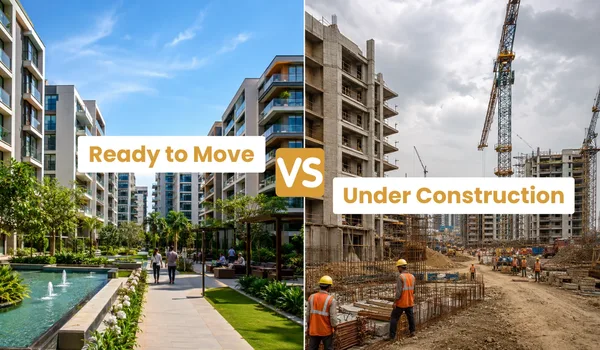
The payment plan you sign is as binding as the floor plan and the possession date, and it has a direct impact on your monthly cash flow and home loan structure for the entire construction period. Taking 30 minutes before signing to read the milestone definitions, check the percentages, confirm the demand-letter process with your bank, and verify the AFS has been registered can save you from disputes that are difficult and expensive to resolve later. If you are also reviewing the legal documents, refer to the legal due diligence guide alongside this page; if you are still deciding between under-construction and ready-to-move, the under-construction vs ready-to-move guide covers the full financial and risk comparison.
Prestige Whitefield Blog