Parking & EV Charging Guide for Whitefield Apartments 2026
Parking is rarely the first question a buyer asks about a Whitefield apartment, but it becomes one of the most consequential once possession is taken. A family with two cars discovering their 3 BHK includes only one parking slot, a stacked-parking system that cannot accommodate their SUV, or no provision to install an EV charger finds the issue difficult and expensive to resolve after purchase. With EV adoption accelerating in Bengaluru and Whitefield’s gated communities filling quickly, parking allocation, type, and EV readiness deserve the same scrutiny as the floor plan and facing. This guide covers what to check, what to ask, and what K-RERA rules apply before you sign.
Parking Types in Whitefield Gated Communities
| Parking type | Description | Pros | Cons |
|---|---|---|---|
| Basement (covered) | Underground parking on one or more levels below the building podium | Protected from sun and rain; higher security; often assigned to higher-floor or premium units | Ramp access can be slow; height restrictions (typically 2.1-2.2m) may exclude tall SUVs; flooding risk in poorly designed basements; lighting and ventilation must be verified |
| Stilt or podium (covered) | Parking on the ground floor or lower podium level under the residential floors | Ground-level access; no ramp; protected from rain; easy in-out | Height restrictions similar to basement; limited depth of shade on open stilt levels; may have less security than enclosed basement |
| Open surface | Marked slots on the surface within the community perimeter | No height restriction; no ramp; easy access; zero maintenance cost | Exposed to sun, rain and dust; vehicle surface damage risk; less secure than covered options |
| Stacked mechanical | Hydraulic lift stacks two cars vertically in the same footprint | Fits more cars in the same area; increasingly common in high-density Whitefield towers | Requires the lower car to be moved before the upper car can be retrieved; height and weight restrictions for large vehicles; maintenance cost for hydraulic equipment; slow at peak morning exit times |
Bottom line: basement covered parking is the most desirable; stacked parking is functional but has meaningful operational trade-offs for families with SUVs or early-morning schedules.
RERA Rules on Parking Allocation
Under the Real Estate (Regulation and Development) Act 2016, a builder cannot allot, transfer or sell a parking space in a residential apartment complex as a standalone unit separate from the flat. Parking is an appurtenant facility of the residential unit and must be specified in the allotment letter as part of the flat’s description. This means you should see your parking slot number and type (basement/stilt/stacked, floor, specific bay number) clearly written in your allotment letter before you pay the booking amount.
Builders can legitimately charge for a second parking space as an add-on to the flat price, or offer a premium parking upgrade (a ground-floor slot, a wider bay, or a slot closer to the lift) for an additional cost. What they cannot do is charge for the first parking space as a separate transaction outside the flat sale. If the sales team tries to sell you a parking space in a separate agreement not linked to your flat purchase, ask for clarification and consult a property lawyer.
The legal due diligence guide covers what to check in your allotment letter, agreement for sale and other key documents before signing.
Bottom line: confirm the parking slot number, type and floor in writing in your allotment letter before paying; verbal commitments from sales staff are not binding.
How Many Parking Spaces Per BHK?
There is no statutory minimum that sets a fixed parking count by BHK configuration across all projects in Karnataka. Allocation is a builder’s commercial and design decision, subject to the approved building plan. In practice, in Whitefield’s gated community market:
| BHK type | Common allocation | Notes |
|---|---|---|
| 1 BHK | 1 car park (typically stilt or basement) | Some compact 1 BHK projects offer only two-wheeler parking; confirm before booking |
| 2 BHK | 1 car park | Larger or premium 2 BHK configurations sometimes include 2 slots; confirm in the allotment letter |
| 3 BHK | 1 or 2 car parks | Premium towers with 3 BHK units typically include 2 slots; value or mid-range towers may provide only 1 |
| 4 BHK | 2 car parks | Most premium 4 BHK projects include 2 dedicated slots; verify the type (dedicated vs stacked) for each |
If you have two cars and are buying a 2 BHK, ask whether a second parking slot is available and what the additional cost is. In mature Whitefield projects, parking scarcity can make a second slot difficult to secure after possession. It is easier and less expensive to negotiate this before booking.
Bottom line: do not assume parking allocation from the BHK type; verify the exact number of slots and their type in the allotment letter before signing.
Stacked Parking: What to Check
If your assigned parking slot is in a stacked system, verify the following before accepting it:
Vehicle height limit: most stacked systems have a maximum vehicle height of 1.55 m to 1.65 m for the upper stack. Most standard sedans and hatchbacks fit; most SUVs and MUVs do not fit on the upper stack and are restricted to lower slots. Ask which level (upper or lower) your slot is on, and whether you have the right to swap if your vehicle does not fit.
Weight limit: stacked systems have a maximum vehicle weight per platform. Confirm your vehicle type fits within the rated capacity.
Retrieval time: during peak morning exit (7-9 am), multiple residents may queue for the same stacking module. In large towers with many stacked slots per module, retrieval can take 5 to 15 minutes if the lower car must be moved first. Visit the parking area at 8 am on a weekday to assess actual wait times before accepting a stacked slot.
Maintenance responsibility: hydraulic stacking systems require regular preventive maintenance. Ask whether the maintenance cost is included in the common area maintenance charge or billed separately. The maintenance and CAM charges guide covers how parking maintenance is typically billed in Whitefield gated communities.
Bottom line: if you have an SUV or a tight morning schedule, a stacked parking slot on the upper level is a meaningful disadvantage; negotiate a lower-stack or dedicated slot before booking if possible.
EV Charging: Three Levels of Readiness
Not all projects described as "EV-ready" offer the same level of provision. There are three meaningful levels of EV charging readiness:
| Level | What it means | What you still need to do |
|---|---|---|
| Conduit-ready | Empty conduit pipes are embedded in the parking structure during construction to allow cable routing later; no electrical circuit or outlet is installed yet | You need to hire an electrician to pull cable through the conduit and install a charging outlet or charger unit; check whether the main electrical panel has spare capacity for your unit |
| Charging-point-ready (socket installed) | A 15-amp or dedicated EV socket is installed at or near the parking slot with a live connection from the building’s electrical infrastructure | You need to supply and install the EV charger unit (EVSE); metering may be shared or separate depending on the building’s design |
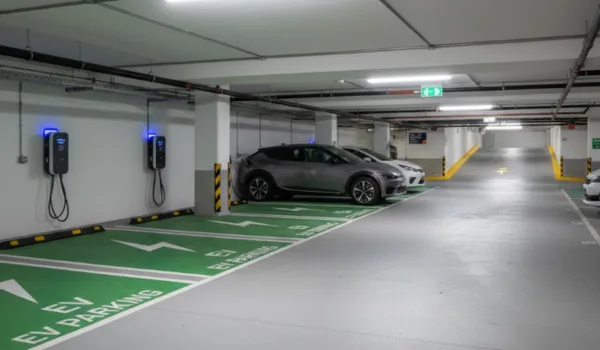
| Active charger installed | A wall-box charger (AC Level 2 type) or similar is already installed and ready to use; often includes a sub-meter for electricity billing | Verify the charger type and output (kW rating) is compatible with your vehicle; check whether metering is sub-metered to your flat or shared |
Ask the builder specifically which level of EV readiness applies to your parking slot. "EV charging available" in a brochure often means conduit-ready, not an installed charger. If you own or plan to buy an EV, confirm the electrical load sanctioned for the building is adequate to support chargers across all units simultaneously; this is a building-wide infrastructure question, not just a per-slot question. The apartment amenities guide covers power backup and building-level electrical infrastructure in more detail.
Bottom line: clarify whether EV-ready means conduit-only, socket-installed or active-charger-fitted; if you own an EV, also verify building-level load capacity.
Installing an EV Charger Post-Possession
If the project does not provide EV charging at handover, you can typically install one after possession, subject to the Residents Welfare Association (RWA) or Apartment Owners Association (AOA) approval. The usual process: submit a request to the RWA with the charger specification and proposed electrician; the RWA checks whether the common area electrical system can support the additional load; a BESCOM-licensed electrician carries out the installation; metering is either from your flat’s BESCOM meter (with a sub-circuit run to the parking level) or through a separate commercial-rate meter. Installation cost varies by the distance from your flat’s meter to the parking slot and the charger type; get three quotations.
Bottom line: post-possession EV charger installation is possible in most Whitefield gated communities with RWA approval; getting conduit-ready infrastructure from the builder reduces the installation cost significantly.
Visitor and Two-Wheeler Parking
In projects above a certain built-up area, the BBMP and BDA approved plans include visitor parking zones. Adequate visitor parking matters practically: if guests cannot park within the community, they park on the service road outside, which frustrates neighbours and sometimes leads to society conflicts. During your site visit, walk the ground level and count visible visitor parking slots against the number of units in the project to get a rough sense of adequacy. Also ask where two-wheeler parking is located; in many Whitefield towers, two-wheeler parking is in a separate zone on the podium or basement and is allocated differently from car parks. Confirm your two-wheeler allocation if applicable.
Bottom line: visitor parking adequacy is visible during a site visit; two-wheeler parking allocation should be confirmed separately from your car park in the allotment letter.
Checklist: What to Confirm Before Booking
| Item | Where to confirm |
|---|---|
| Number of car parking slots included | Allotment letter; floor plan annex |
| Parking type (basement/stilt/stacked/surface) and specific slot number or bay identifier | Allotment letter |
| Level of slot if stacked (upper or lower) | Allotment letter or parking plan |
| Vehicle height and weight limits (for stacked systems) | Builder specification sheet or stacking system data plate |
| EV readiness level (conduit/socket/active charger) | Builder specification sheet; ask in writing |
| Two-wheeler parking allocation and zone | Allotment letter |
| Visitor parking zone location | Approved site plan; visible during site visit |
| Parking maintenance included in CAM or billed separately | Maintenance agreement or builder FAQ |
| Whether a second car park is available and at what additional cost | Sales team; confirm in writing |
The first-time homebuyer checklist covers all the pre-booking document and verification steps in a single structured sequence, of which parking confirmation is one item.
Prestige Whitefield: Parking and EV Provisions
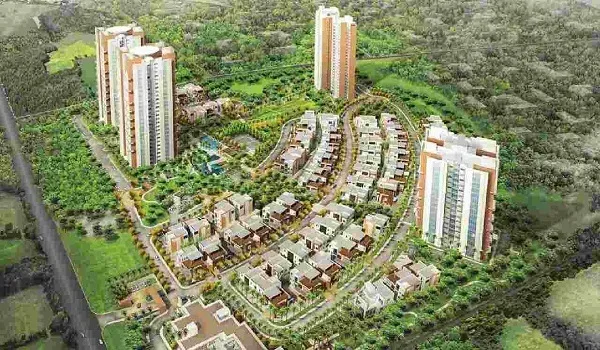
At Prestige Whitefield by Prestige Group, a large-format 18-acre township in Whitefield, the parking specification including the number of slots per BHK, parking type by tower, EV readiness level and visitor parking provisions is part of the project’s approved building plan and specifications. Request a copy of the parking plan and EV specification from the sales team before booking. For the current unit mix, pricing and configuration details, see the price page and the Whitefield guide.
Frequently Asked Questions
1. How many parking spaces do I get with a 2 BHK apartment in Whitefield?
Typically one dedicated car park in most Whitefield gated communities, though larger or premium 2 BHK configurations sometimes include two. Confirm the exact allocation and slot type in the allotment letter before booking; verbal commitments are not binding.
2. Can I install an EV charging point in my apartment parking space?
Yes, with RWA/AOA approval and a BESCOM-licensed electrician in most projects. If the building is conduit-ready, installation cost is lower. If not, the electrician must route cable from your flat’s meter panel to the parking slot, which increases cost. Get three quotations before proceeding.
3. What is the difference between dedicated parking and stacked parking?
A dedicated slot is a fixed bay you drive into directly. A stacked system uses a hydraulic lift to stack two vehicles vertically; the upper car can only be retrieved after the lower one is moved. Stacked systems have vehicle height limits (typically 1.55-1.65 m) that exclude most SUVs from the upper level.
4. Is visitor parking mandatory in gated communities in Whitefield?
BBMP and BDA norms for projects above certain sizes include visitor parking in approved plans. Whether a specific project has adequate provision depends on the approved plan and what was built. Ask to see the approved site plan with visitor parking marked, and verify during your site visit.
5. Can the builder charge separately for a parking space?
Under RERA, parking cannot be sold as a standalone unit separate from the flat. Builders can price a second parking slot as an add-on, or charge for a premium location upgrade, but the first allocated parking slot should be part of the flat’s allotment letter. Confirm the structure in writing before signing.
Conclusion
Parking is a permanent feature of your apartment purchase that is difficult and expensive to upgrade after possession. Confirming the number of slots, the parking type, the stacked system level (if applicable) and the EV charging readiness level before signing the allotment letter costs nothing and protects you from a post-possession dispute. With Bengaluru’s EV adoption growing steadily, conduit-ready or socket-installed EV provision in the parking slot is rapidly becoming a meaningful feature rather than a niche ask. Use the checklist in this guide at your next site visit, and read the legal due diligence guide and the amenities guide alongside this page for a complete picture of what to evaluate in a Whitefield gated community before committing.
Prestige Whitefield Blog